
Trust the Tap: Virginia Health Catalyst Connects Water Equity to Oral Health Equity
Dental professionals have long told patients to reach for water instead of soda. But Virginia Health Catalyst’s Isabelle Stitt-Fredericks recently made the case on an AAPHD webinar that the advice only works if people trust what’s coming out of the tap. For millions of Americans, that trust is not a given.
3–4 Minute Read
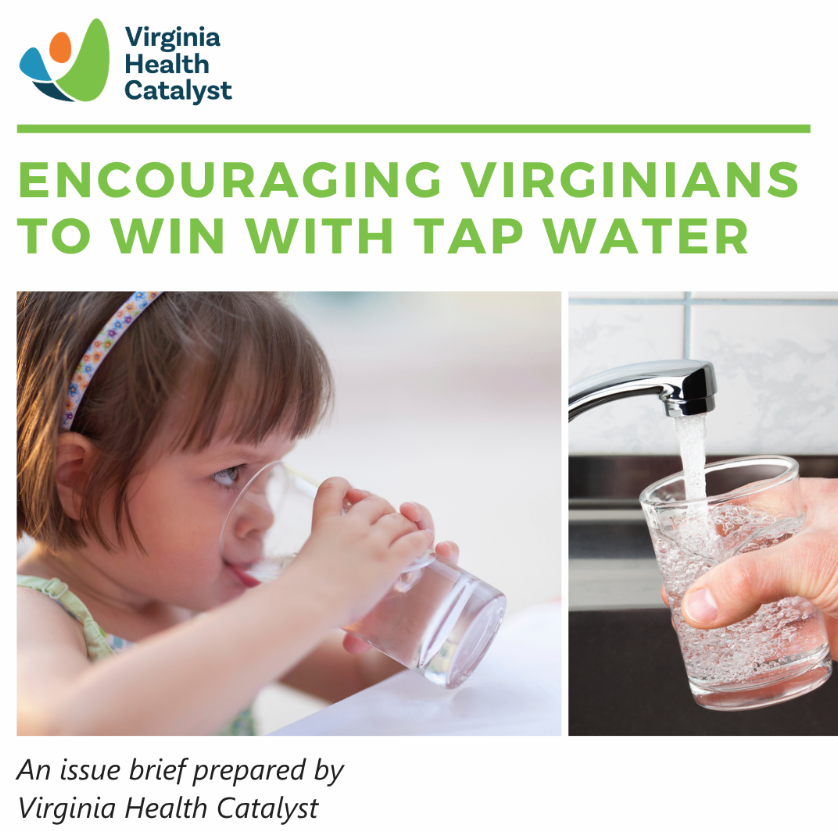
On August 19, 2026, the American Association of Public Health Dentistry’s Equity, Diversity, and Inclusion Committee hosted “Water Equity is Oral Health Equity,” a webinar featuring Isabelle Stitt-Fredericks (they/them), Senior Program Manager of Water at Virginia Health Catalyst, an ANOHC member coalition. The session tackled a problem that sits at the intersection of two things dental public health depends on: community water fluoridation and public confidence in tap water itself.
The numbers behind the talk are hard to ignore. Roughly 40% of Americans say they don’t trust their tap water, a statistic that cuts directly against decades of public health guidance recommending tap water over sugar-sweetened beverages and reinforcing the benefits of community water fluoridation. Stitt-Fredericks walked attendees through how that distrust takes root, tracing it to historical, cultural, and community-level experiences, along with present-day social determinants that shape whether someone reaches for a glass of tap water or a bottled alternative.
Rather than stopping at the problem, the webinar offered a path forward. Stitt-Fredericks shared tips dental professionals can use to build more trust in water for their patients, including how to guide conversations about drinking water. They also outlined community-centered partnerships and engagement strategies that coalitions and public health professionals can use to rebuild confidence in drinking water, particularly in communities where that trust has been eroded for legitimate historical reasons. The approach mirrors the work Stitt-Fredericks leads at Virginia Health Catalyst, where they analyze data to inform advocacy campaigns and work with stakeholders to protect and expand access to safe, fluoridated drinking water across the state.
For ANOHC’s network, the webinar is a useful reminder that oral health equity work doesn’t start and end at the dental chair. Coalitions across the country are already fighting water fluoridation battles state by state. This session gives advocates a framework for pairing that policy work with the trust-building needed to make it matter at the household level. The full recording is available on AAPHD’s website for anyone who wants to bring the content back to their own coalition’s programming.
FAQ
What was the “Water Equity is Oral Health Equity” webinar?
It was a webinar hosted by AAPHD’s Equity, Diversity, and Inclusion Committee on August 19, 2026, exploring how trust in drinking water affects oral health outcomes and offering strategies for building that trust in underserved communities.
Who presented the webinar?
Isabelle Stitt-Fredericks, Senior Program Manager of Water at Virginia Health Catalyst, an ANOHC member coalition. They lead the organization’s water equity and community water fluoridation initiatives.
Why does water trust matter for oral health?
Dental public health guidance relies on people drinking tap water instead of sugary alternatives and benefiting from community water fluoridation. If people don’t trust their tap water, they’re less likely to drink it, which can undercut both hydration and fluoridation’s protective effects on oral health.
Who should watch the recording?
AAPHD designed the session for dentists, dental hygienists, dental students, researchers, and public health professionals, but it’s also a useful resource for any coalition working on fluoridation advocacy or community water messaging.
How does this connect to ANOHC’s broader network?
Water fluoridation remains a top policy priority for coalitions across the ANOHC network. This webinar adds a trust-and-equity lens to that work, offering coalitions concrete strategies for engaging communities that have historical reasons to be skeptical of tap water.
Watch the full webinar and read Isabelle Stitt-Fredericks’ full bio at aaphd.org.